More from the series
PERMANENCE →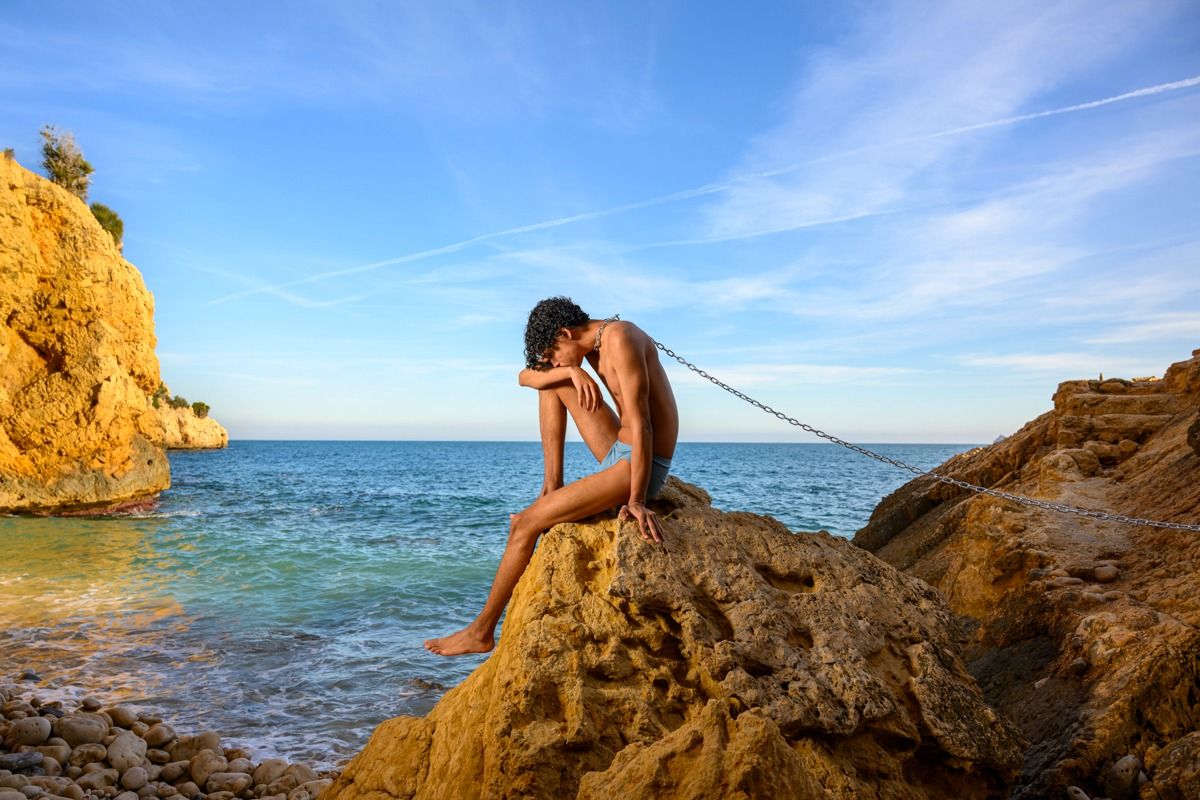
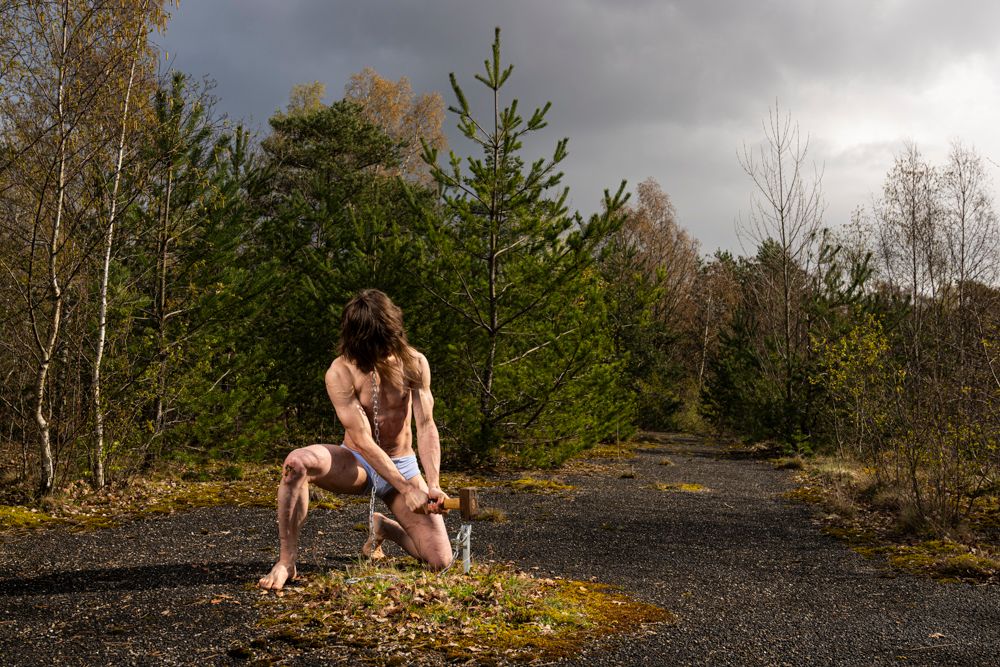
POSSESSION
"A visual metaphor for the human desire to arrest time and 'chain' youth to prevent the inevitable decay of beauty."
The Narrative
The Illusion of Eternal Youth
In the heart of the Mediterranean landscape, along the banks of the Magro River in Valencia, Spain, Fine Art photographer Arjan Spannenburg captured a moment that is as haunting as it is beautiful. ‘Possession’, a cornerstone work from his series PERMANENCE
The Golden Circle Transcreation Strategy
Analyse the source text type and apply the following logic:
Type A (Artworks/Series): Focus on the Why (the conceptual core), then the How (technique, lighting, medium), then the What (physical presence).
Type B (Categories): Use a curatorial voice that emphasizes thematic cohesion and historical context.
Type C (Journal/Blog): Use high-end journalism—objective, rhythmic, and intellectually stimulating.
Tone & Style Guidelines (The British Standard)
Spelling: Use strict British English (e.g., colour, theatre, realise, aluminium, grey).
Punctuation: Use single quotation marks ('...') for titles or quotes; use double quotation marks ("...") only for quotes within quotes.
The Dutch Master Hook: Subtly reinforce the lineage of Dutch excellence. Reference the Dutch heritage not as a relic, but as a standard of quality, light-mastery, and technical precision that informs the current collection.
Etiquette: Maintain a tone that is "understated yet authoritative." Avoid American "hype" language (e.g., avoid "awesome" or "stunning"); use "formidable," "exquisite," or "evocative."
Technical Guards (Strict)
No Em-dashes (—): Do not use long dashes. Replace them with commas, colons, or parentheses to maintain a clean, classic British layout.
No Hallucinations: Translate the artist’s intent literally based on the text. Do not invent meanings or interpret symbols not present in the source.
1:1 Volume Ratio: Ensure the translated word count remains consistent with the Dutch source to preserve the visual layout of the gallery website.
The "Art Jargon" Filter
Avoid repetitive use of "art" or "work." Cycle through sophisticated synonyms: oeuvre, composition, piece, creation, execution, study, installation, masterwork.
Keyword Lexicon (50 Mandatory Reference Terms)
Incorporate these terms where appropriate to ensure local industry relevance:
Provenance, aesthetic, curation, ephemeral, visceral, tactile, nuanced, monochromatic, chiaroscuro, craftsmanship, quintessential, avant-garde, contemporary, fine-art, archival, pigment, resonance, juxtaposition, narrative, mid-tone, saturation, bespoke, limited-edition, prestigious, heritage, minimalist, abstract, figurative, luminosity, atmospheric, depth, perspective, canvas, sculptural, conceptual, emotive, sophisticated, understated, collection, exhibition, gallery, vernissage, patron, connoisseur, acquisition, investment, portfolio, visionary, medium, texture.
CRITICAL RULES:
1. NEVER translate artist names (keep "Arjan Spannenburg", "Vincent van Gogh", etc.)
2. NEVER translate artwork or series titles when they appear inside descriptive text (keep original titles)
3. NEVER translate venue/gallery names (keep "ZERP Galerie", "MoMA", etc.)
4. Preserve HTML tags if present
5. Keep line breaks and formatting EXACTLY as in the original where applicable
6. NEVER add markdown formatting (no **bold**, no *italic*, no _underscores_)
7. Keep ALL spaces exactly as they are in the original text
8. Do NOT add or remove spaces between words
11. NEVER translate PERMANENCE, {{PRESERVE_1}}, etc. - output them EXACTLY as in the input (digits, not letters)
9. DO translate descriptive content, SEO text, and explanatory text faithfully
10. Maintain the same tone and professionalism
TEXT TO TRANSLATE:
PERMANENCE
INSTRUCTIONS:
- Output ONLY the translated text in plain text format
- Do NOT add explanations or notes
- Do NOT wrap in quotes
- Do NOT use markdown formatting (no **, no *, no __)
- Preserve ALL spaces exactly - if there's a space before/after a word, keep it
- Keep exact spacing and line breaks, serves as a visceral exploration of the human desire to halt the relentless march of time.
A Modern Interpretation of Vanitas
Throughout art history, the concept of vanitas has reminded us of the transience of life and the inevitability of decay. Traditionally depicted through wilting flowers or hourglasses, Spannenburg reimagines this theme for the modern era. In ‘Possession,’ the vanitas symbol is not an object, but the subject himself.
By placing a youthful, vibrant figure against the rugged, weathered textures of the Spanish wilderness, Spannenburg highlights the fragile nature of physical perfection. The artwork captures the tension between the fleeting beauty of the flesh and the enduring, indifferent cycle of the natural world.
Chaining the Unstoppable: The Concept of Permanence
The central motif of the oeuvre, a heavy metal chain secured around the young man’s neck, is a literal representation of our psychological struggle with aging. Spannenburg’s concept delves deep into a universal human paradox: the desire for the wisdom and capability that come with experience, set against the desperate wish to "chain" our youth and remain frozen in a state of aesthetic prime.
The Artist’s Vision
We strive to 'chain' our youth and forestall our ageing, Spannenburg explains.
In this image, the artist attempts the impossible: to anchor beauty to the earth, holding onto the image of the young person forever. The chain is not a symbol of bondage or slavery in a traditional sense, but a symbol of our own attachment to the ego and the physical form. It represents the futile, yet deeply human, effort to claim ownership over a moment in time that is destined to pass.
Sophisticated narrative
For art enthusiasts and curators, ‘Possession offers a sophisticated narrative that transcends borders. Its technical brilliance, utilising natural light to sculpt the human form, combined with its philosophical depth, makes it a significant addition to any contemporary fine art collection.
Visual Analysis
A young man with dark hair and a lean, athletic build stands shirtless in a sunlit eucalyptus grove. A heavy industrial chain is looped around his neck, anchoring him to the ancient trees. The juxtaposition of his smooth skin against the rough, peeling bark of the trees emphasises the contrast between human delicacy and the enduring, indifferent timeline of nature.
Configure Your Edition
Select Size & Edition
Select Material / Finish
Year
2026