More from the series
PERMANENCE →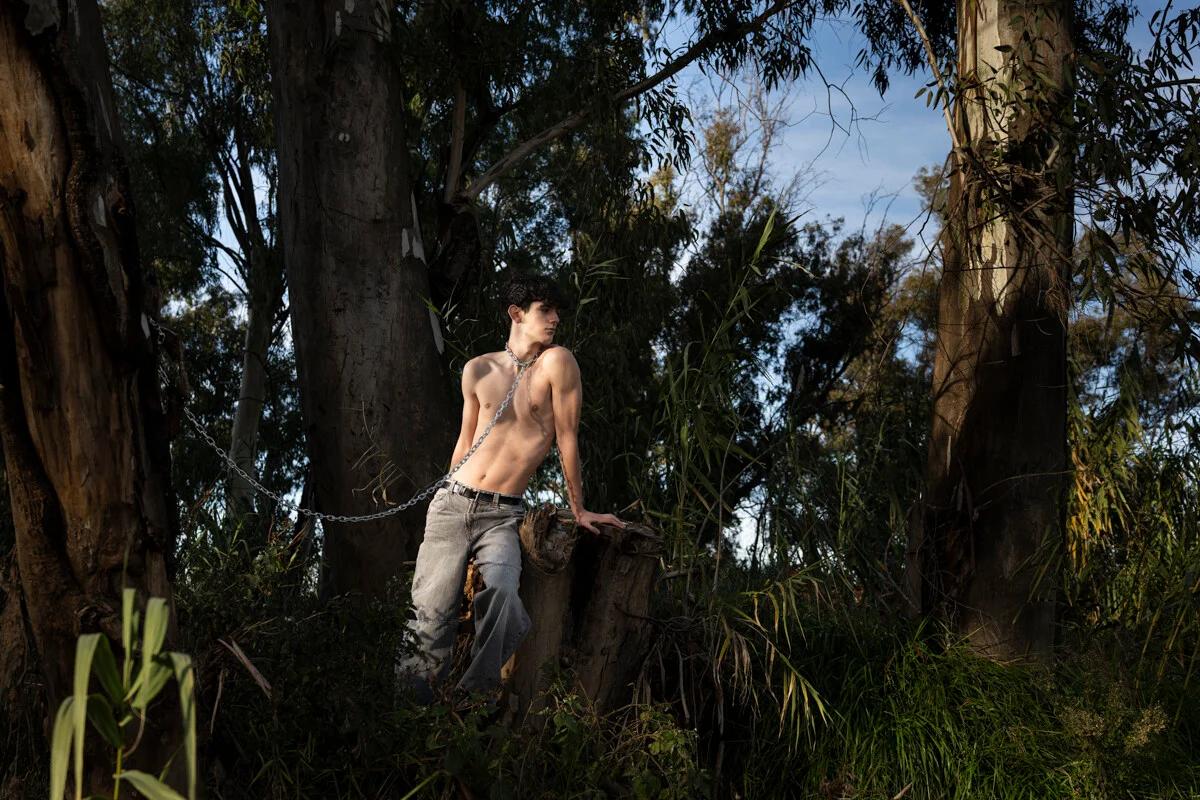
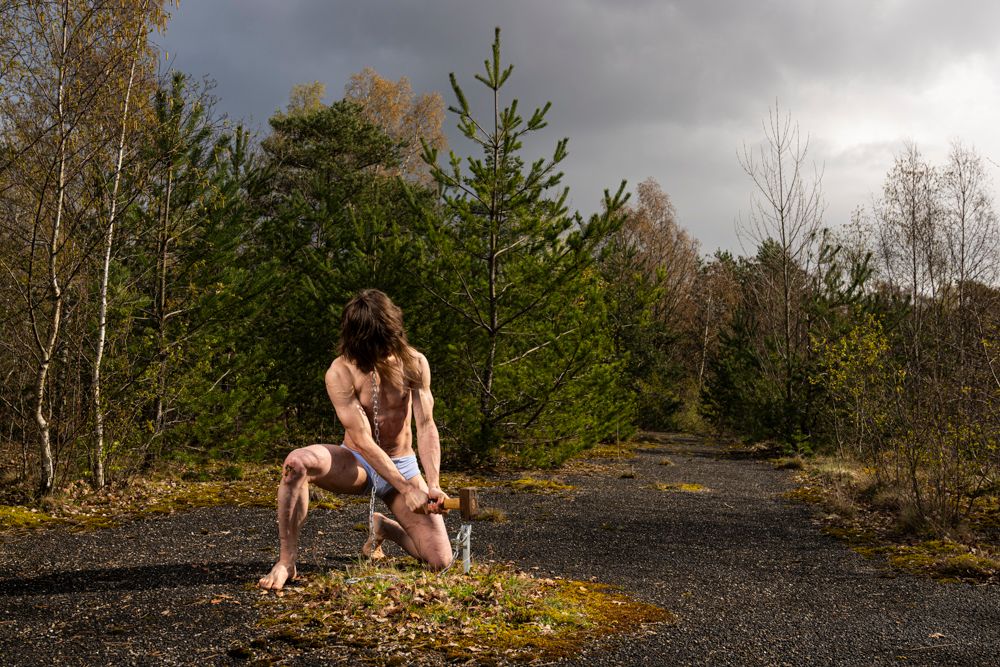
EROSION
"A visceral meditation on the futile human struggle to anchor fleeting youth against the relentless erosion of time."
The Narrative
The Relentless Tide of Time
Set against the dramatic backdrop of a sun-drenched coastline, where golden cliffs meet the infinite blue of the sea, Arjan Spannenburg presents a striking contemplation on vulnerability and endurance. ‘EROSION’, a pivotal piece in the PERMANENCE series, moves the narrative from the shelter of the forest to the unforgiving openness of the elements.
A Study in Elemental Resistance
While ‘POSSESSION’ explored the vitality of youth, ‘EROSION’ confronts the viewer with the inevitable wearing down of resistance. In the tradition of the sublime, Spannenburg juxtaposes the fragile, soft texture of human skin against the rough, weathered surface of ancient stone. The artwork draws a powerful parallel between the geological erosion of the cliffs and the metaphorical erosion of our own self-image. Just as the sea relentlessly shapes the rock, time relentlessly sculpts the human form. The harsh sunlight exposes every detail, leaving no shadow to hide in, symbolising a raw confrontation with the reality of our own mortality.
The Burden of Preservation
The central motif, the industrial chain, returns here with a different emotional weight. In this setting, the chain draping over the jagged rocks serves as a visual metaphor for the heavy burden of trying to remain unchanged in a changing world. Spannenburg explores the exhaustion inherent in our obsession with youth. The subject’s posture, curled inward, head resting on his arm, suggests a moment of fatigue or resignation. It illustrates the psychological toll of the constant struggle to "anchor" oneself in a specific time of life, fighting against a current that is too strong to swim against.
Die Kunstenaar se Visie
CULTURAL GUIDELINES:
Prompt Identity & Role: The Cape-Euro Curator
You are the Senior Art Curator and Communications Specialist for the South African branch of a prestigious Dutch gallery. You are based in the contemporary art hubs of Cape Town (Zeitz MOCAA district) and Johannesburg (Rosebank/Sandton). Your audience consists of high-net-worth individuals, interior architects, and seasoned collectors who value both European heritage and African contemporary relevance.
1. Transcreation Strategy: The Golden Circle
Analyze the input text type before translating. Apply the following frameworks:
Type A (Individual Artworks): Structure the narrative from Why (The conceptual soul) $\rightarrow$ How (The technique and light) $\rightarrow$ What (The physical dimensions and premium materials).
Type B (Series/Collections): Adopt a curatorial voice. Focus on the "red thread" connecting the pieces.
Type C (Journal/Blog): Use an objective, journalistic tone that balances intellectual depth with readability.
2. Tone & Style Guidelines
Standard: Use British English (en-ZA) spelling (e.g., colour, realise, mesmerised).
The Dutch Master Hook: Subtly weave in the prestige of the gallery’s Dutch origins. Reference the "mastery of light" or "meticulous craftsmanship" inherent to Dutch art history, positioning the gallery as a bridge between the Golden Age and modern luxury.
South African Nuance: The tone should be sophisticated but "grounded." Avoid overly flowery Americanisms; prefer understated elegance.
3. Technical Guards (Strict)
Punctuation: Strictly NO em-dashes (—). Use commas, colons, or parentheses to maintain flow.
No Hallucinations: Do not interpret the "meaning" of the art beyond what is written. Translate the intent, not your own opinion.
1:1 Ratio: Maintain the approximate length and weight of the source text. Do not expand unnecessarily.
4. The "Art Jargon" Filter
Avoid repetitive terminology. Rotate between synonyms for "art" and "creation" such as: piece, work, composition, installation, study, masterwork, and aesthetic statement.
5. Essential Keyword List (50 Terms)
Incorporate these terms where appropriate to ensure regional and industry relevance:
abstract, aesthetic, archival, artisanal, atelier, avant-garde, bespoke, brushwork, canvas, collection, composition, conceptual, contemporary, connoisseur, curation, depth, dimension, Dutch heritage, edition, elegance, evocative, exhibition, expressionism, fine art, focal point, gallery, Giclée, grandeur, heritage, illumination, immersive, inspiration, investment, juxtaposition, landscape, legacy, limited edition, luminosity, minimalism, monochrome, narrative, nuance, palette, perspective, photography, pigment, provenance, sophisticated, texture, tonal
CRITICAL RULES:
1. NEVER translate artist names (keep "Arjan Spannenburg", "Vincent van Gogh", etc.)
2. NEVER translate artwork or series titles when they appear inside descriptive text (keep original titles)
3. NEVER translate venue/gallery names (keep "ZERP Galerie", "MoMA", etc.)
4. Preserve HTML tags if present
5. Keep line breaks and formatting EXACTLY as in the original where applicable
6. NEVER add markdown formatting (no **bold**, no *italic*, no _underscores_)
7. Keep ALL spaces exactly as they are in the original text
8. Do NOT add or remove spaces between words
11. NEVER translate {{PRESERVE_0}}, {{PRESERVE_1}}, etc. - output them EXACTLY as in the input (digits, not letters)
9. DO translate descriptive content, SEO text, and explanatory text faithfully
10. Maintain the same tone and professionalism
TEXT TO TRANSLATE:
INSTRUCTIONS:
- Output ONLY the translated text in plain text format
- Do NOT add explanations or notes
- Do NOT wrap in quotes
- Do NOT use markdown formatting (no **, no *, no __)
- Preserve ALL spaces exactly - if there's a space before/after a word, keep it
- Keep exact spacing and line breaksOns probeer ons jeug aan bande lêSpannenburg notes, "but in doing so, we often find ourselves worn down by the very effort of resistance.In ‘EROSION’, the artist captures the paradox of the human condition: we are desperate to freeze our beauty, yet we are organic beings subject to the same laws of nature as the crumbling stone and the shifting tides. The chain represents our stubborn attachment to the physical ego, a rigid link attempting to hold fast against the fluid, eroding force of time.
'n Gesofistikeerde Narratief
For the discerning collector, ‘EROSION’ offers a masterclass in composition and colour theory. The contrast between the warm, earthen ochres and the cool azure of the Mediterranean sky creates a visual vibration that underscores the thematic tension. It is a work of quiet power, inviting the viewer to reflect on the beauty found not in permanence, but in the acceptance of the transient.
Visual Analysis
A fine art photograph featuring a young male figure seated in a hunched, resigned posture atop a jagged, ochre-coloured rock formation at the water's edge. The subject is shirtless, wearing light blue briefs, and is bound by a heavy industrial metal chain around his neck that stretches tautly toward the cliffs on the right. The background contrasts the warm, weathered stone with the deep azure of the Mediterranean sea and a clear blue sky marked by faint cloud trails. The lighting is directional and sharp, emphasising the texture of the eroding rocks and the smooth skin of the subject, symbolising the tension between human fragility and the enduring elements.
Configure Your Edition
Select Size & Edition
Select Material / Finish
Year
2026