PERMANENCE
2026
The Invisible Architect of Our Own Limits
We all like to believe we are free. But if you look closely at the patterns of your life, you will find areas where you are held back, not by external forces, but by the "chains" inside your own mind. We hold onto old versions of ourselves, past pains, or rigid visions of the future because the familiar feels safer than the unknown. We are often the architects of our own captivity, building invisible walls out of our emotions, behaviours, and fears.
The series PERMANENCE is a visual intervention. Arjan Spannenburg takes these abstract, internal struggles and makes them undeniably physical. He explores the "red line" of the human psyche: the way we anchor ourselves to a specific state of being, whether we like it or not.
Visualising the Internal Chain
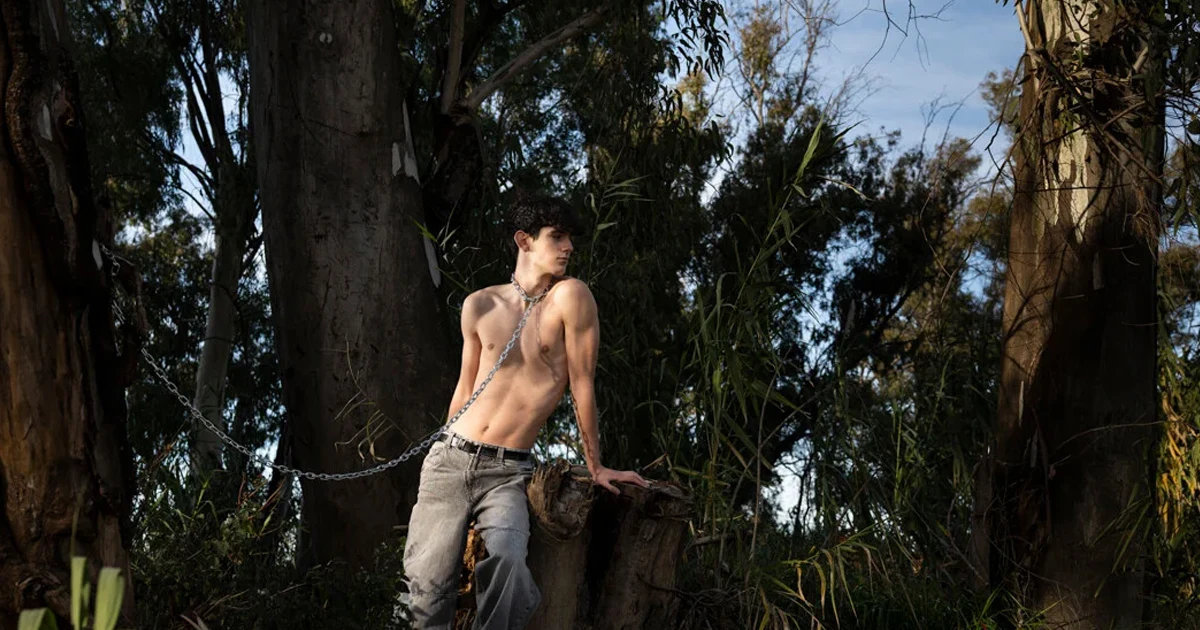
Spannenburg serves as a guide into the silent territory of the mind. By using the heavy industrial chain as a recurring motif, he gives a shape to our internal attachments. In these works, the chain is not a symbol of outside oppression. It is the physical manifestation of a thought, a habit, or a memory that we have wrapped around our own necks.
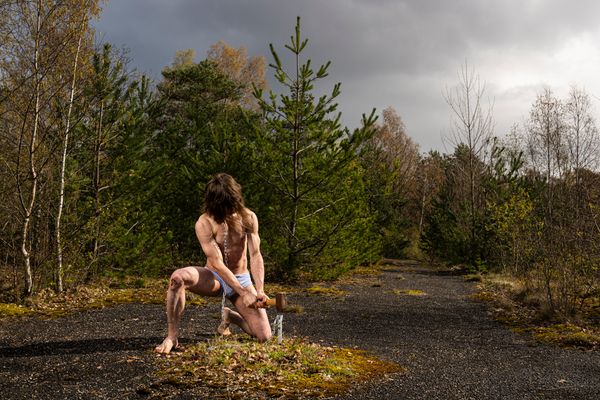
Whether it is the figure in DRIVEN pinning himself to a ruined road, or the subjects in POSSESSION and EROSION struggling with the weight of their own identity, the message is clear: the most powerful chains are the ones we forge ourselves. By moving into vivid colour, Spannenburg forces us to confront these internal battles in high definition with living colours. This is not a distant, monochrome memory; this is the raw, vibrating reality of the human condition today.
From Witness to Awareness
For the elite collector, PERMANENCE offers more than aesthetic beauty. It offers a profound moment of recognition. These works serve as a "plan" for the viewer to see the chain, to acknowledge its weight, and to understand the psychological cost of holding on.
In the realm of high-end art, this series acts as a conduit between fine art photography and profound psychological exploration. It elevates a room into a space for contemplation, prompting viewers to ponder: "What am I clinging to that has ceased to serve me?" Acquiring a piece from Permanence signifies more than just obtaining art; it is a testament to the human pursuit of liberation from our own internal barriers.