Research & Process
Redefining Fetishism within Contemporary Art and Culture
This article explores the multi-faceted nature of fetishism, moving beyond common taboos to examine it as a profound form of aesthetic and material devotion. By analysing scientific classifications, statistical data, and the influence of iconic artists like Mapplethorpe and Olaf, the piece illustrates how non-standard interests are integrated into the broader human experience. Furthermore, it highlights the work of Arjan Spannenburg, specifically his focus on the submissive experience and the radical trust required to translate visceral devotion into fine art.
Beyond the Taboo: Understanding the Spectrum of Devotion
Die konsep van fetisjisme is lank reeds na die skaduwees van maatskaplike diskoers verban, dikwels misverstaan as bloot 'n afwyking. 'n Dieper joernalistieke ondersoek openbaar egter dat fetisjisme gewortel is in 'n diepe toegewydheid aan spesifieke voorwerpe, materiale of eienskappe. Terwyl die term dikwels 'n seksuele konnotasie dra, definieer navorsers dit breër as 'n sterk toewyding aan iets spesifieks. Hierdie inherente trek na materiale soos latex, leer of nylon is nie 'n moderne anomalie nie, maar 'n verskynsel wat sedert die oudheid gedokumenteer is.
In the contemporary art world, this dedication is viewed through a lens of aesthetic appreciation. By stripping away the layers of prejudice, we find that these fascinations often stem from a complex interplay of sensory input and cultural influences. The tactile nature of leather and the reflective qualities of rubber offer a rich visual language that artists have utilised to explore the boundaries of human identity and attraction.

Die Wetenskaplike Paradoks: Klassifikasie en Kulturele Persepsie
The classification of fetishism remains a point of contention within scientific communities. Its inclusion in the DSM-5 (Diagnostic and Statistical Manual of Mental Disorders) is controversial, drawing parallels to historical classifications that were later removed as societal understanding evolved. Critics argue that fetishism should be recognised as a sexual preference or an aesthetic orientation rather than a psychological disorder.
Statistical Insights into Human Desire
Navorsing wat in Europa onderneem is, bied 'n onthullende blik op die algemeenheid van hierdie belangstellings. Navorsing met meer as 'n duisend deelnemers dui daarop dat belangstellings in linne, nylon en leer veel algemener is as wat die algemene publiek mag vermoed. Byvoorbeeld, belangstelling in linne is aangeteken deur meer as sewentig persent van deelnemers in sekere steekproewe, terwyl leer en latex 'n beduidende teenwoordigheid gehandhaaf het. Hierdie syfers dui daarop dat die "nie-standaard" eintlik 'n aansienlike deel van die menslike ervaring is.

Die artistieke invloed: Van Mapplethorpe tot Olaf
The visibility and acceptance of fetish aesthetics in high culture owe much to the visionary work of legendary photographers and artists. Pioneers such as Robert Mapplethorpe and Erwin Olaf have played a crucial role in transitioning these themes from underground subcultures to the walls of prestigious museums. By focusing on the beauty, form, and symmetry of their subjects, they have invited the viewer to appreciate the aesthetic value of the fetish object.
The Biological and Cultural Origins of Attraction
Why does the human mind fixate on specific materials? Theories range from biological proximity in the brain's sensory processing centres to socio-cultural factors. In some cultures, specific body parts or garments carry heightened symbolic value. Interestingly, observations in primates, such as the famous gorilla Koko, suggest that these fixations may have deep evolutionary roots, transcending the human species and pointing toward a fundamental aspect of consciousness and sensory attachment.
Fetish Artwork Photography by Arjan Spannenburg
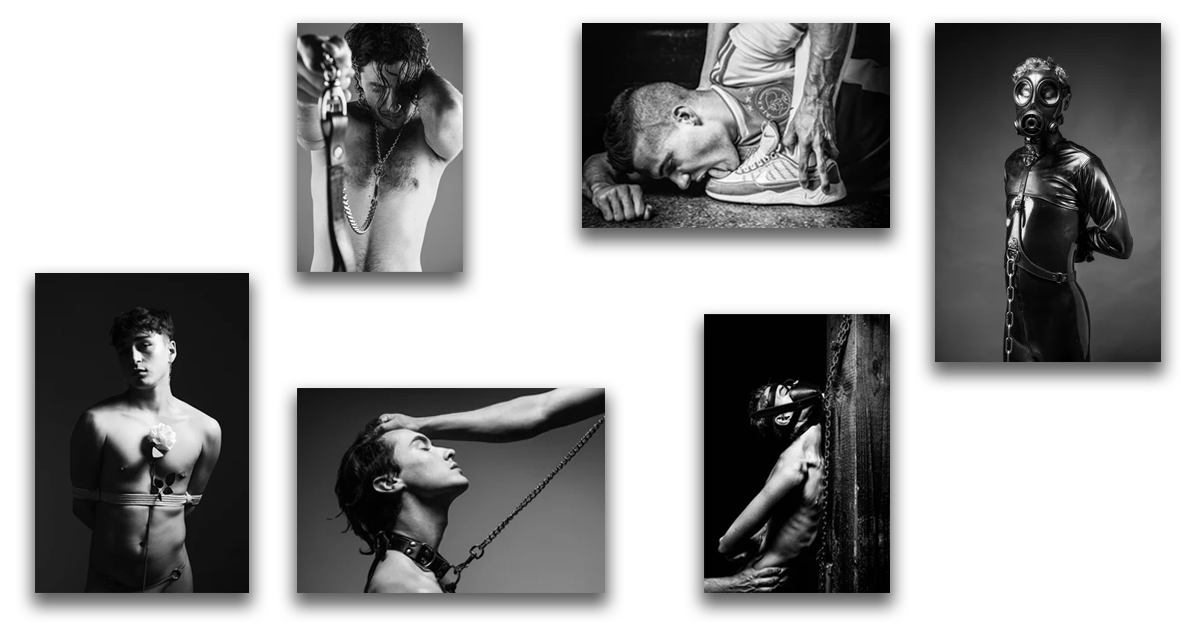
Arjan Spannenburg's artistic oeuvre serves as a sophisticated bridge between raw subcultural expression and fine art photography. His work meticulously deconstructs the fetishistic gaze, focusing on the interplay between synthetic materials and the vulnerability of the human form. By utilising high-contrast black and white techniques, Spannenburg elevates materials like latex and leather, often dismissed as mere provocations, to the status of classical sculptural elements. This connection is deeply rooted in the artist’s ability to capture the "strong devotion" that researchers define as the core of fetishism.
'n Bepalende kenmerk van Spannenburg se ondersoek is sy fokus op die onderdanige subjek eerder as die dominante figuur. In sy fetisj-verwante kunswerke is die dominante party gewoonlik afwesig uit die raam, wat die kyker se aandag geheel en al verskuif na die interne ervaring van die een wat gelei word. Spannenburg vind 'n diepe fassinasie in die vermoë van individue om ander op so 'n diep, viscerale vlak te vertrou. Hierdie dinamiek berus op 'n ongesproke ooreenkoms waar grense met absolute presisie gerespekteer word, wat 'n unieke vorm van menslike verbinding skep. Dit weerspieël die professionele verhouding tussen die kunstenaar en sy onderwerpe; die hoë vlak van kwesbaarheid wat in sy werk vertoon word, is 'n direkte gevolg van die onderwerpe se vertroue in Spannenburg om hul intimiteit in diepgaande visuele kuns te vertaal.
Resulting Artworks








More from the Journal
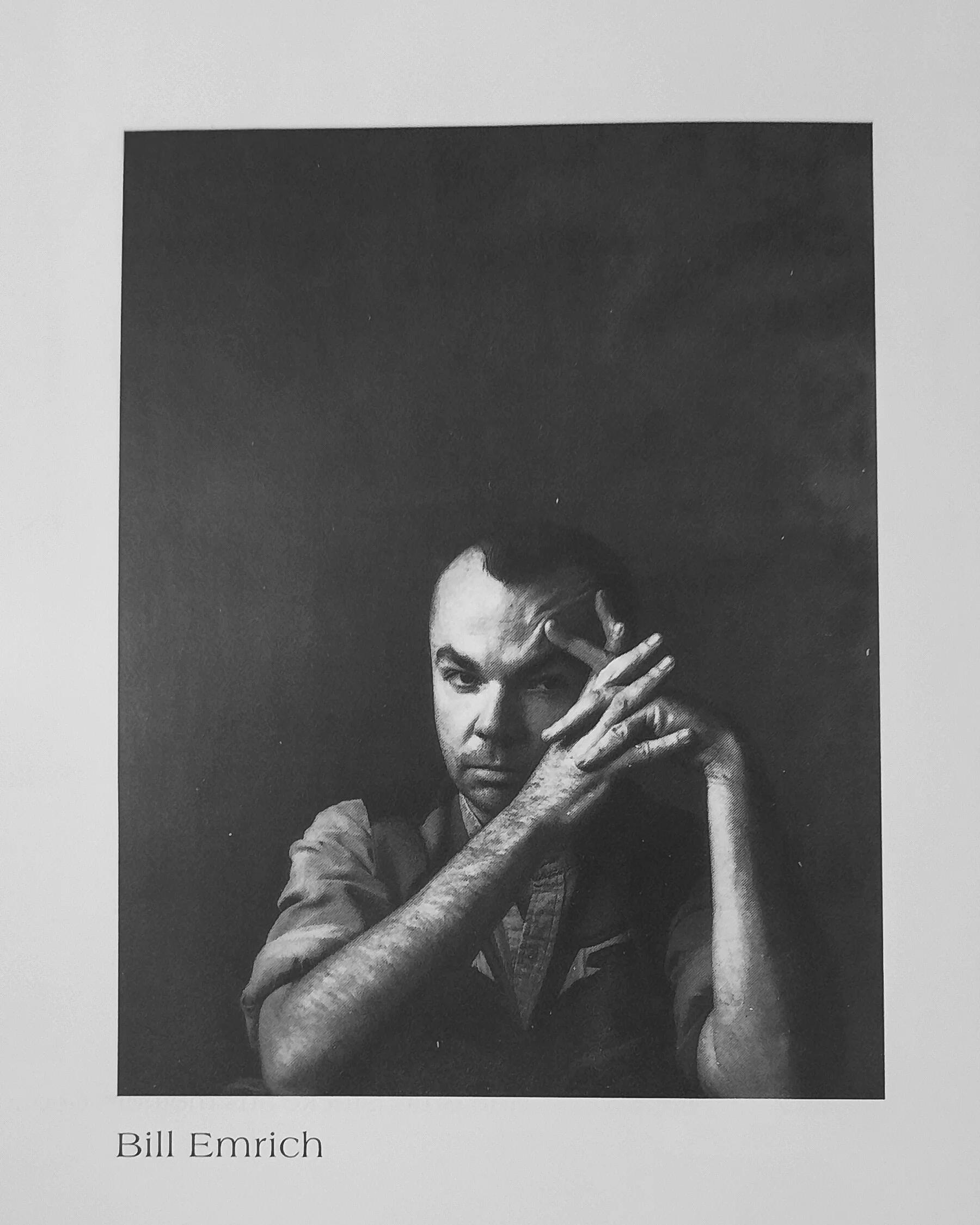
BILL EMRICH: Raw vulnerability in male photography (ode and analysis)

The Fluidity of the Eternal: Decoding the Hermaphrodite Endormi

The Martyrdom of Beauty: Assessing Saint Sebastian as a Gay Icon in Visual Arts
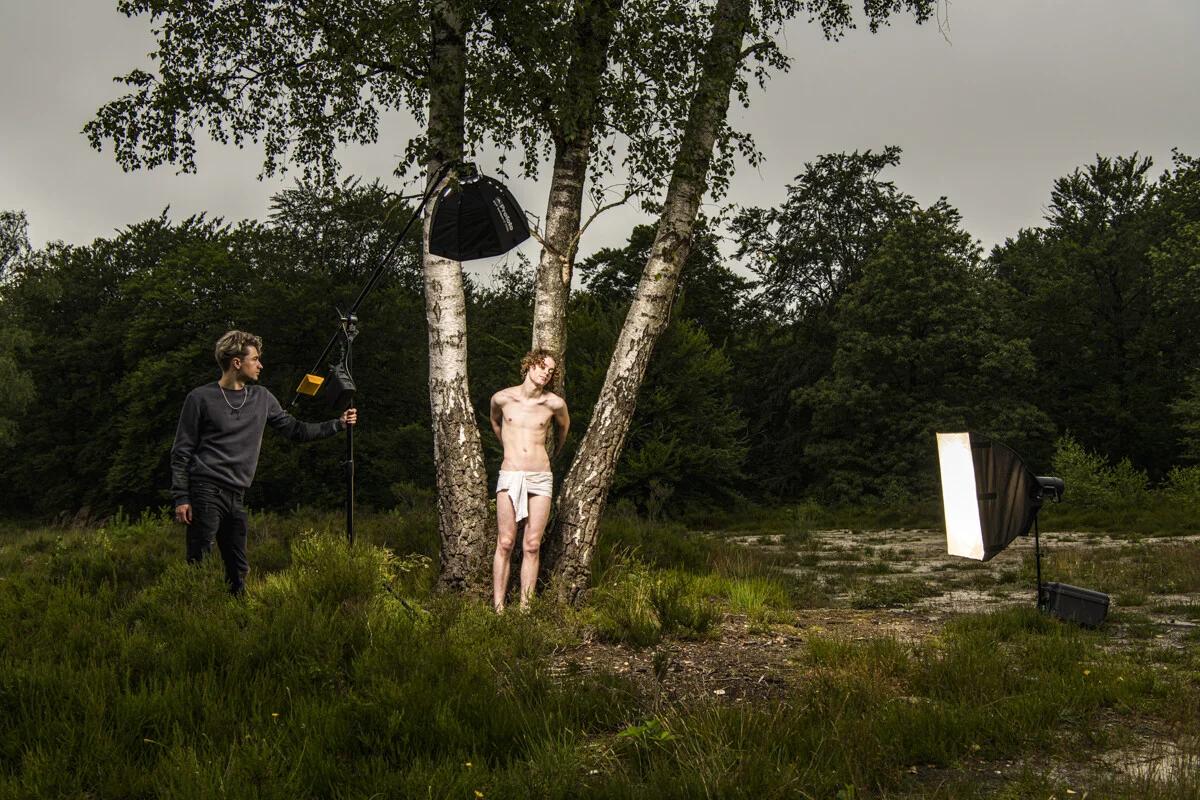
The Making of Saint Sebastian: Vulnerability Bound in Nature
Die Ontwikkeling van 'RESTRAINT'